
Your Location:Home>Browse special issues>Special topics on Clinical and Basic research of Tripterygium wilfordii and its compatibility
Special topics on Clinical and Basic research of Tripterygium wilfordii and its compatibility
- The Paper
Systematic Review on Safety of Chinese Medicines Combined with Tripterygium wilfordii Preparations in Treatment of Rheumatoid Arthritis and Exploration on Underlying Network Regulatory Mechanisms of Enhancing Efficacy and Reducing Toxicity Enhanced Publication
Abstract:ObjectiveTo systematically evaluate the safety of Chinese medicines combined with Tripterygium wilfordii polyglycoside tablets/Tripterygium wilfordii tablets (TWPT/TWT) in the treatment of rheumatoid arthritis (RA), and to explore the network regulatory mechanisms of enhancing efficacy and reducing toxicity of commonly used combination regimes.MethodThe literature involving the adverse reactions of TWPT/TWT in treating RA was searched and collected from three Chinese databases (CNKI, Wanfang Data, VIP) and three English databases (PubMed, Cochrane Library, Embase) from the inception of the databases to July 2021. All studies were assessed by the Cochrane risk of bias tool, and the data were extracted and analyzed by Stata 15.0. Furthermore, Integrative Pharmacology-based Research Platform of Traditional Chinese Medicine 2.0 (TCMIP v2.0,http://www.tcmip.cn/) was used to construct a "drug target-symptom gene of efficacy and toxicity" interaction network, to explore the underlying network regulatory mechanisms of enhancing efficacy and reducing toxicity of common T. wilfordii preparation combinations.ResultA total of 2 132 articles on Chinese medicines combined with TWPT/TWT in the treatment of RA were retrieved, and 18 of them were finally included. The systematic review showed that the adverse reactions of TWPT/TWT against RA mainly occurred in the digestive system, blood system, and reproductive system, of which digestive system had the highest incidence of damages. However, the combination with Chinese medicines effectively alleviated the adverse reactions caused by TWPT/TWT [RR (95% CI)=0.45 (0.30, 0.66), P<0.01]. In addition, the subgroup analysis indicated that the age of RA patients, course of disease, combination regimen, medication dosage and duration of treatment all affected the occurrence of adverse reactions of TWPT/TWT. It was found in clinical studies that total glucosides of paeony (TGP) and TWPT/TWT was most widely combined, and the effect of TGP in reducing TWPT/TWT-induced hepatotoxicity was also more significant than that of other Chinese medicines. Moreover, taking this combination regime as an example, this paper explored the "efficacy-toxicity" association mechanisms of TGP-TWPT/TWT against RA. The "drug target-symptom gene of efficacy and toxicity" interaction network revealed that the core network targets of TGP-TWPT/TWT enhanced efficacy and reduced toxicity mainly through regulating immunity-inflammation-related pathways, metabolic pathways and cell signal transduction. Especially, interleukin-4 (IL-4) and interleukin-13 (IL-13), which were involved in the "immunity-inflammation" module, were the common targets of TGP-TWPT/TWT to enhance efficacy and reduce toxicity. The endogenous sterols, bile acids and bile salts, insulin secretion and other metabolic pathways in the "body metabolism" module were closely associated with the mechanisms of TWPT/TWT inducing hepatotoxicity and TGP reducing hepatotoxicity. While cell function regulation pathways, such as stem cell factor (SCF)/tyrosine kinase receptor (KIT) signaling pathway and phosphatidylinositol 3-kinase (PI3K)/protein kinase B (Akt)signaling pathway were involved in both anti-RA effects and hepatotoxicity of TWPT/TWT.ConclusionClinical application of suitable Chinese medicines combined with TWPT/TWT in the treatment of RA can effectively improve the rheumatism and reduce the adverse reactions of TWPT/TWT, and TGP-TWPT/TWT has the most significant toxicity-reducing effect. Further biological network-based investigation indicates that the toxicity-reducing mechanism of TGP-TWPT/TWT may be related to the regulation of interleukin signaling pathway and bile acid metabolism pathway, and the synergistic efficacy-enhancing effect of the combination may be achieved by acting on interleukin signaling pathway and cell function regulation pathway.Keywords:Tripterygium wilfordii preparations;combination with Chinese medicines;clinical rational use of drugs;systematic reviews;network pharmacology827|206|10 <HTML><H-PDF><L-PDF><XML>Updated:2023-02-07
Effect and Mechanism of Cuscutae Semen Total Flavonoids Combined with Tripterygium wilfordii Polyglycoside Tablets on Ovarian Germline Stem Cells of Physiological Mice by Notch Signaling Pathway
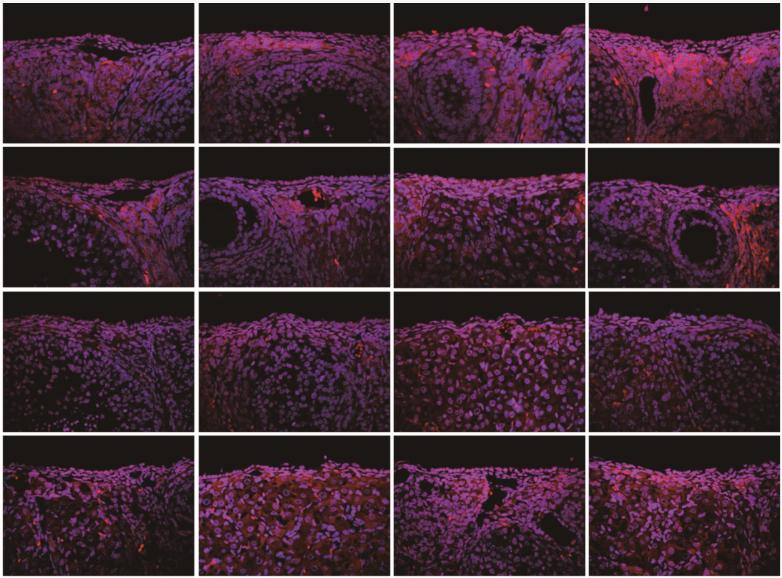
Abstract:ObjectiveTo observe the effect of Cuscutae Semen total flavonoids combined with Tripterygium wilfordii polyglycoside tablets (TWPT) on ovarian germline stem cells of female physiological mice through neurogenic locus notch homolog (Notch) signaling pathway.MethodSixty female Kunming mice (5 weeks old) were randomly divided into normal group, Tripterygium wilfordii polyglycoside tablets low-, high-dose groups (13.65 mg·kg-1·d-1 and 27.3 mg·kg-1·d-1, 1 and 2 times clinical equivalent dose), Cuscutae Semen total flavonoids low- and high-dose groups (150 mg·kg-1·d-1 and 300 mg·kg-1·d-1), and combination group (13.65 mg·kg-1·d-1 TWPT and 150 mg·kg-1·d-1 Cuscutae Semen total flavonoids), with 10 in each group. After 3 weeks of continuous administration, the uterus/brain and ovarian/brain indexes were calculated, and the pathological changes of ovarian tissue were observed under light microscope. The content of estradiol in serum was determined by enzyme linked immunosorbent assay (ELISA). Immunofluorescence assay was performed to observe the expressions of germline stem cell markers in ovarian epithelium, including mouse vasa homologue (Mvh), octamer-binding transcription factor 4 (Oct4), tyrosine-protein kinase receptor (c-kit), Nanog, Notch signaling pathway molecules, neurogenic locus notch homolog protein 1 (Notch1), hes family BHLH transcription factor 1(Hes1), and jagged canonical Notch ligand 1 (JAG1).ResultCompared with the normal group, low and high doses of TWPT had no significant effect on the uterus/brain and ovary/brain indexes and the uterus and ovary morphologies of mice, while only the number of atretic follicles was increased (P<0.01). The expressions of ovarian germline stem cell markers and Notch signaling pathway molecules had a decreasing trend in TWPT low-dose group, while the expressions of Mvh, c-kit, and Nanog were down-regulated (P<0.05, P<0.01) and the expressions of Notch1 and Hes1 were also reduced (P<0.01) in TWPT high-dose group. However, the above indexes were increased in Cuscutae Semen total flavonoids low-dose group (P<0.05, P<0.01). Compared with the low does of TWPT group, the combination group had a decrease in the increased number of atretic follicles (P<0.01), an improvement in the down-regulated expressions of Mvh and Nanog (P<0.01), and an increase in the expressions of Notch1 and Hes1 (P<0.05, P<0.01).ConclusionOvarian germline stem cells are the source target of the reproductive toxicity of TWPT. Cuscutae Semen total flavonoids participate in the regulation of the germline stem cell pathways to alleviate the reproductive toxicity caused by TWPT, and its mechanism of action may be related to the Notch signaling pathway.Keywords:Tripterygium wilfordii polyglycoside tablets(TWPT);Cuscutae Semen total flavonoids;combination;ovarian germline stem cells;neurogenic locus notch homolog protein (Notch) signaling pathway293|133|18<HTML><H-PDF><L-PDF><XML>Updated:2023-02-07Effect of Tripterygium wilfordii Polyglycoside on Expression of NFAT2/COX-2 in Kidney Tissues of Rats with Diabetic Nephropathy
Abstract:ObjectiveTo explore the underlying mechanism of Tripterygium wilfordii polyglycoside tablets (TWPT) in the prevention and treatment of kidney injury in diabetic nephropathy (DN) through the nuclear factor of activated T-cells 2(NFAT2)/cyclooxygenase-2(COX-2) pathway.MethodForty-two male SD rats of SPF grade were selected and randomly divided into a normal group (n=8) and an experimental group (n=34) after one week of adaptive feeding. The rats in the normal group were fed conventionally. The DN model was established in rats of the experimental group by intraperitoneal injection of streptozotocin (STZ) following one week of feeding on a high-fat and high-glucose diet. After the death and failure cases during modeling were eliminated, the remaining 24 model rats were randomly divided into model group, valsartan (8.33 mg·kg-1·d-1) group, and TWPT (5 mg·kg-1·d-1) group. Rats in normal group and model group were given equal amounts of normal saline by gavage. After six weeks, body weight was measured and urine samples were collected. Blood samples were collected from the abdominal aorta, and then the rats were sacrificed for sampling. Biochemical indicators, such as serum blood urea nitrogen (BUN), serum creatinine (SCr), alanine aminotransferase (ALT), blood lipid, blood glucose, and 24-hour urine total protein (24 h UTP), were determined. Hematoxylin-eosin (HE) staining and Masson staining were used to observe the pathology of the kidney. Enzyme-linked immunosorbent assay (ELISA) was used to detect NFAT2 and COX-2 expression levels in the serum. Western blot and Real-time fluorescence quantitative polymerase chain reaction(Real-time PCR)were adopted to detect NFAT2, COX-2 protein and mRNA expression in kidney tissues, respectively.ResultCompared with the normal group, the model group showed elevated 24 h UTP, BUN, SCr, CHO, TG, and FBG, increased serum NFAT2 and COX-2 production and expression (P<0.01), and elevated protein and mRNA expression of NFAT2 and COX-2 in kidney tissues (P<0.01). In addition, the pathology of the kidney showed enlarged glomeruli, mild proliferation of mesangial cells, and widened mesangial stroma. Compared with the model group, the TWPT group showed decreased 24 h UTP, BUN, SCr, CHO, TG, and FBG (P<0.05,P<0.01), basically normal glomerular morphology, decreased expression of serum NFAT2 and COX-2 (P<0.01), and down-regulated protein and mRNA expression of NFAT2 and COX-2 in kidney tissues (P<0.01).ConclusionTWPT can alleviate 24 h UTP in DN model rats, protect renal function, and improve renal pathology, and its mechanism of action may be related to the down-regulation of NFAT2/COX-2 expression in the serum and kidney tissues.Keywords:Tripterygium wilfordii polyglycoside tablets;diabetic nephropathy;nuclear factor of activated T-cells 2(NFAT2)/cyclooxygenase-2(COX-2) pathway;experimental study248|84|5<HTML><H-PDF><L-PDF><XML>Updated:2023-02-07Mechanism of Glycyrrhizae Radix et Rhizoma Alleviating Tripterygium wilfordii Polyglycoside Tablets-induced Liver Injury
Abstract:ObjectiveTo investigate the protective effect of cytochrome P4502D6 (CYP2D6) and cytochrome P4503A4 (CYP3A4), key enzymes of drug metabolism in liver, on acute liver injury in water extract of Glycyrrhizae Radix et Rhizoma (WEOGRR).MethodHealthy male Kunming mice were divided into normal group, model group, WEOGRR low-, medium- and high-dose groups (5, 10, 15 g·kg-1·d-1) and positive drug group (diammonium glycyrrhizinate, 75 mg·kg-1·d-1), with 10 in each group. One week after preventive administration, acute liver injury model was induced by single intragastric administration of 270 mg·kg-1 Tripterygium Glycosides tablets, and samples were collected after 18 h. The pathological changes of liver were observed by hematoxylin-eosin (HE) staining. Serum liver function indexes including alanine aminotransferase (ALT), aspartate aminotransferase (AST), γ-glutamyl transpeptadase (γ-GT), alkaline phosphatase (ALP), and total bilirubin (TBIL) as well as the levels of oxidative stress indexes including malondialdehyde (MDA) and superoxide dismutase (SOD) in hepatocytes were determined by biochemical method. Real-time polymerase chain reaction (Real-time PCR) and Western blot were performed to detect the mRNA and protein expression levels of CYP2D6 and CYP3A4, respectively.ResultCompared with normal group, model group had significant hepatocyte swelling and inflammatory cell infiltration (P<0.01), increased AST, ALT, γ-GT, ALP and TBIL (P<0.05), elevated MDA and decreased SOD (P<0.01) as well as down-regulated mRNA and protein expression levels of CYP2D6 and CYP3A4 (P<0.05). Compared with the model group, the normal group had intact liver structure without obvious abnormality, and the WEOGRR groups and positive drug group presented alleviated hepatocyte swelling and inflammatory cell infiltration (P<0.01), reduced AST, ALT, γ-GT, ALP and TBIL (P<0.01), lowered MDA and increased SOD (P<0.01) as well as up-regulated expression levels of CYP2D6 and CYP3A4 (P<0.01).ConclusionThe protective effect of WEOGRR on acute liver injury induced by Tripterygium glycosides tablets may be related to reducing the contents of AST, ALT, γ-GT, ALP and TBIL in serum, inhibiting MDA and increasing the activity of SOD in liver cells, and enhancing the activities of CYP2D6 and CYP3A4, thus accelerating the metabolism of toxic substances.Keywords:Tripterygium wilfordii polyglycoside tablets;liver injury;Glycyrrhizae Radix et Rhizoma;cytochrome P450344|161|8<HTML><H-PDF><L-PDF><XML>Updated:2023-02-07Clinical Efficacy of Compound Tripterygium wilfordii Preparation(Xinfeng Capsules) in Improving Immune Inflammation of Rheumatoid Arthritis Due to Spleen Deficiency and Dampness Exuberance Based on Apriori Algorithm and Random Walk Model
Abstract:ObjectiveTo investigate the effect of Xinfeng capsules on immunoinflammatory indicators in patients with rheumatoid arthritis (RA) due to spleen deficiency and dampness exuberance.MethodA total of 102 patients were randomly divided into control group and observation group according to the random number table method, with 51 cases in each group. All patients were treated with methotrexate tablets, while those in the observation group received additional Xinfeng capsules. The course of treatment in both groups was 12 weeks. The 28-joint disease activity score (DAS28), visual analogue scale (VAS) scores, morning stiffness time, erythrocyte sedimentation rate (ESR), high-sensitivity C-reactive protein (hs-CRP), rheumatoid factor (RF), anti-cyclic citrullinated peptide (anti-CCP) antibody, vascular endothelial growth factor (VEGF), and serum amyloid A (SAA) of the two groups before and after treatment were compared. The efficacy and incidence of adverse events were compared between the two groups. The Apriori association rule model and random walk model were constructed to evaluate the effect of Xinfeng capsules in improving hs-CRP, ESR, RF, SAA, VEGF, and anti-CCP.ResultThere were no dropouts in this study. There was no statistical difference in the indicators between the two groups before treatment. After 12 weeks of treatment, the total effective rate in the observation group was 90.19% (46/51), which was higher than 74.51% (38/51) in the control group (χ2=4.320,P<0.05). DAS28, VAS score, and morning stiffness time in the observation group were improved compared with those in the control group (P<0.05). Apriori association rule model results showed that the application of Xinfeng capsules in the observation group had a strong correlation with the reduction of RF, ESR, hs-CRP, SAA, and VEGF. The results of the random walk model showed that the improvement coefficients of hs-CRP, ESR, RF, SAA, and VEGF in the observation group were all better than those of the control group, and the improvement coefficient of anti-CCP in the control group was better than that of the observation group. The improvement degree of hs-CRP, ESR, RF, SAA, and VEGF in the observation group was superior to that of the control group (P<0.05). The incidence of adverse reactions in the observation group was lower than in the control group (χ2=4.057,P<0.05).ConclusionOn the basis of the treatment with methotrexate tablets, Xinfeng capsules can effectively improve the immunoinflammatory level in RA due to spleen deficiency and dampness exuberance and reduce the incidence of adverse reactions.Keywords:Xinfeng capsules;rheumatoid arthritis;immunoinflammation;spleen deficiency and dampness exuberance syndrome375|129|7<HTML><H-PDF><L-PDF><XML>Updated:2023-02-07Meta-analysis of Effect of Tripterygium wilfordii Polyglycoside Tablets Combined with Methotrexate and/or Leflunomide on Autoantibodies in Rheumatoid Arthritis
Abstract:ObjectiveTo evaluate the effect of Tripterygium wilfordii polyglycoside tablets (TWPT) combined with conventional synthetic disease-modifying antirheumatic drugs (csDMARDs) including methotrexate (MTX) and/or leflunomide (LEF) on autoantibodies in rheumatoid arthritis (RA) patients.MethodPubMed, EMBASE, Web of Science, Cochrane Library, China National Knowledge Infrastructure (CNKI), VIP, Wanfang Data, and China Biomedical Literature Service System (SinoMed) were searched for randomized controlled trials (RCTs) of TWPT combined with MTX and/or LEF in the treatment of RA patients from database inception to December 1, 2021. Primary outcome indicators included rheumatoid factor (RF) and anti-citrullinated protein antibody (ACPA), and secondary outcome indicators included immunoglobulin (IgA, IgG, and IgM) and adverse drug events (ADE).ResultThirty-one RCTs, involving 2 643 adult patients, were included, including 20 RCTs of TWPT combined with MTX, 10 of TWPT combined with LEF, and one of TWPT combined with MTX and TWPT. The follow-up time ranged from two weeks to 13 months. Compared with csDMARDs alone, TWPT combined with other drugs significantly improved serum RF of RA patients [SMD=-2.45, 95% CI [-2.97, -1.93], P<0.000 01], anti-CCP [SMD=-1.41, 95% CI (-2.35, -0.48), P=0.003], IgM [SMD=-1.90, 95% CI (-3.03, -0.76), P=0.001], and IgA [SMD=-1.18, 95% CI (-2.23, -0.12), P=0.03]. There were no significant effects on IgG [SMD=-1.02, 95% CI (-2.04, 0.01), P=0.05] and ADE [RR=0.87, 95% CI (0.66, 1.15), P=0.32].ConclusionThe results of this study show that compared with csDMARDs alone, TWPT combined with csDMARDs can effectively improve the levels of autoantibodies in RA patients without increasing the incidence of ADE. However, due to the limited quality and quantity of the included RCTs, the relevant conclusions are only used as a reference for the clinical diagnosis and treatment of RA, and more high-quality studies are still needed to further confirm their efficacy.Keywords:Tripterygium wilfordii polyglycoside tablets;rheumatoid arthritis;autoantibodies;Meta-analysis517|102|10<HTML><H-PDF><L-PDF><XML>Updated:2023-02-07Exploration on "Efficacy-toxicity" Association Mechanisms of Tripterygium wilfordii Polyglycoside Tablets Against Rheumatoid Arthritis Based on Multi-omics Integrated Regulatory Network Enhanced Publication
Abstract:ObjectiveTo explore the "efficacy-toxicity" association mechanisms of Tripterygium wilfordii polyglycoside tablets (TWPT) by establishing and analyzing an interaction network associated with the clinical efficacy of TWPT in the treatment of rheumatoid arthritis (RA) and TWPT-induced liver injury.MethodOn the basis of the TWPT efficacy-related gene expression profile and TWPT-induced liver injury-related protein expression profile which were both obtained from our clinical cohorts, the "efficacy-toxicity" association network of TWPT was constructed, and the key network targets were identified by calculating the topological values of the nodes, including the degree, closeness and betweenness. After that, the biological functions and pathways of the key network targets were investigated by enrichment analysis.ResultA total of 119 differentially expressed genes (58 up-regulated and 61 down-regulated) between RA patients with TWPT well and weak response were identified as TWPT efficacy-related genes by clinical transcriptomics, and 49 differentially expressed proteins (36 up-regulated and 13 down-regulated) were demonstrated to be TWPT-induced liver injury-related proteins by clinical proteomics. In addition, the clinical symptom enrichment analysis indicated that the TWPT efficacy-related genes were significantly associated with various clinical symptoms of arthralgia in traditional Chinese medicine and clinical phenotypes of modern medicine, and most of the TWPT-induced liver injury-related proteins were involved in digestive system abnormalities. Therefore, the aforementioned multi-omics data represented the main clinical symptoms of TWPT treating RA and inducing liver injury. Mechanically, the "efficacy-toxicity" association network revealed that both TWPT efficacy-related genes and TWPT-induced liver injury-related core proteins were involved in the "immune-inflammatory" imbalance, especially playing an important role in neutrophil degranulation, complement cascade reaction, and immune-inflammatory response mediated by protein post-translational modification. Notably, the above genes and proteins were also enriched in various signaling pathways related to cell proliferation and cell cycle regulation, such as RAS and mitogen-activated protein kinase (MAPK) signaling pathway, and in several liver functional processes, such as glycogen metabolism and redox reaction.ConclusionThis study systematically explained the "efficacy-toxicity" association characteristics and molecular mechanisms of TWPT by applying a research strategy integrating clinical phenomics, transcriptomics and proteomics, laying a good data foundation for exploring the "efficacy enhancing and toxicity-reducing" mechanisms of TWPT.Keywords:Tripterygium wilfordii polyglycoside tablets;rheumatoid arthritis;drug-induced liver injury;multi-omics integration;"efficacy-toxicity" association network424|457|15<HTML><H-PDF><L-PDF><XML>Updated:2023-02-07


