
Your Location:Home>Browse special issues>Special topics on Clinical and Basic research of Primary Sjogren's Syndrome
Special topics on Clinical and Basic research of Primary Sjogren's Syndrome
- The Paper
Effect of Huashi Runzao Prescription on Structure and Function of Submandibular Gland in Sjögren's Syndrome Model Mice
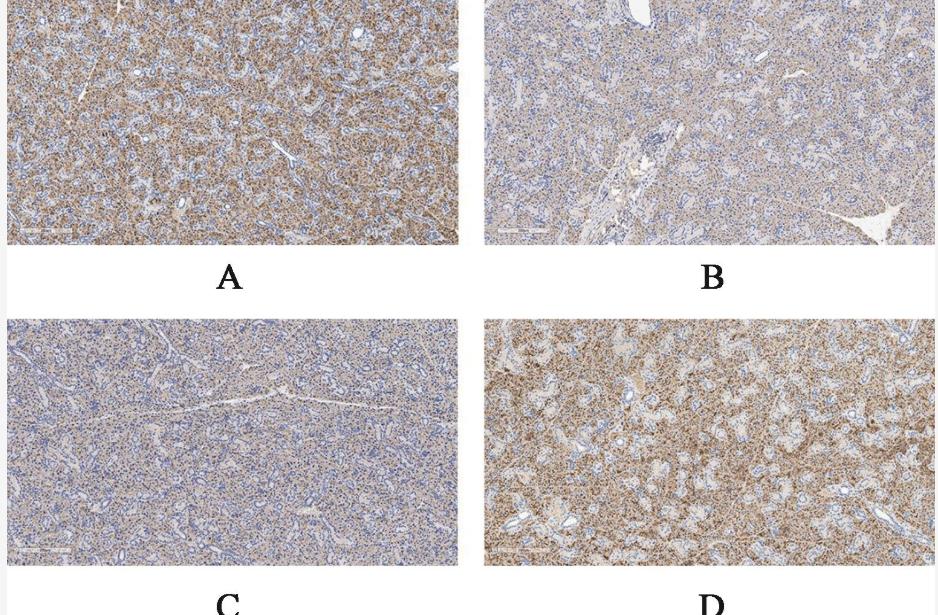
Abstract:ObjectiveTo investigate the effects of Huashi Runzao prescription (HRP) on the histopathological injury and function of submandibular gland in naive non-obese diabetic (NOD/Ltj) mouse model of Sjögren's syndrome (SS) and its regulatory effect on aquaporin 5 (AQP5) expression in submandibular gland cells.MethodThe SS model was induced in NOD/Ltj mice. The NOD/Ltj female mice aged nine weeks were selected and randomly assigned into model group,HRP group (7.15 g·kg-1·d-1),and hydroxychloroquine (HCQ) group (1.30 g·kg-1·d-1), and female BALB/c mice in the same age were selected and assigned into the normal group, with six mice in each group. Drug intervention lasted eight weeks. The water consumption and salivary flow rate (SFR) of each group were recorded. The pathological staining results of the submandibular gland of mice in each group were observed and scored. AQP5 expression was determined by immunohistochemistry (IHC) and Western blot.ResultCompared with the normal group, the model group showed increased water consumption (P<0.05) and reduced SFR (P<0.05). Compared with the model group, the HRP group showed decreased water consumption (P<0.05) and increased SFR (P<0.05), and the HCQ group showed increased SFR (P<0.05). In terms of histopathological results of the submandibular gland,compared with the normal group,the model group showed increased pathological score, number of lymphocyte infiltration foci,and percentage of lymphatic infiltration area (P<0.05). Compared with the model group, the HRP group showed reduced pathological scores and number of lymphocyte infiltration foci (P<0.05), and the HRP group and the HCQ group showed reduced percentage of lymphatic infiltration area(P<0.05). The results of IHC and Western blot showed that compared with the normal group,the model group showed down-regulated expression level of AQP5 protein (P<0.05), and compared with the model group and the HCQ group,the HRP group showed up-regulated expression level of AQP5 protein (P<0.05).ConclusionHRP can improve the secretion function of submandibular gland acinous cells and glandular structure injury in SS model mice, and its mechanism may be related to the up-regulation of AQP5 protein expression level in submandibular gland cells.Keywords:Huashi Runzao prescription;Sjögren's syndrome;submandibular gland;NOD/Ltj mice;aquaporin 5(AQP5)299|167|4 <HTML><H-PDF><L-PDF><XML>Updated:2023-05-17
Effect of Huashi Runzao Prescription on Primary Sjögren's Syndrome
Abstract:ObjectiveTo observe the efficacy and safety of Huashi Runzao prescription for patients with primary Sjögren's syndrome (pSS) of combined dryness and dampness pattern.MethodA total of 105 eligible patients were randomized into the experimental group (65 cases) and control group (40 cases), and they were respectively treated with Huashi Runzao prescription and hydroxychloroquine for 12 weeks. Visual Analogue Scale (VAS) was employed to assess the symptoms. The symptoms of dryness, fatigue, and pain, European League Against Rheumatism (EULAR) Sjögren's Syndrome Patient Reported Index (ESSPRI), EULAR Sjögren's syndrome disease activity index (ESSDAI), and immune inflammatory indicators before and after treatment were compared between the two groups, and adverse reactions were observed.ResultAfter treatment, the ESSPRI score was lower than that before treatment in the experimental groups (P<0.01) and was lower in the experimental group than in the control group (P<0.05). The VAS scores of dry mouth, dry eyes, overall dryness, fatigue, and pain in the experimental group decreased compared with those before treatment (P<0.01), and the experimental group had lower VAS scores of dry mouth and overall dryness than the control group (P<0.01). After treatment, the ESSDAI score of both groups decreased compared with that before treatment (P<0.05, P<0.01), but there was no significant difference between the groups. After treatment, the level of immunoglobulin M (IgM) decreased (P<0.01) and the level of complement C3 increased (P<0.01) in the experimental group, while the level of complement C3 decreased in the control group (P<0.05). There was no significant difference in the laboratory indexes between groups. During the treatment, stomachache occurred to one case in the experimental group, which was alleviated after the treatment, and no adverse reaction was observed in the control group. According to the chi-square test, the occurrence of adverse reactions was insignificantly different between the two groups.ConclusionHuashi Runzao prescription can alleviate the symptoms of dryness, fatigue, and pain, and reduce disease activity without associated side effects in pSS patients with combined dampness and dryness pattern.Keywords:Sjögren's syndrome;Zaobi;combined dampness and dryness pattern;resolving dampness and moistening dryness;treatment;Huashi Runzao prescription299|142|5<HTML><H-PDF><L-PDF><XML>Updated:2023-05-17Clinical Characteristics of Geographic Tongue in Patients with Primary Sjögren's Syndrome
Abstract:ObjectiveTo analyze the clinical characteristics of geographic tongue in patients with primary Sjögren's syndrome (pSS).MethodPatients with pSS treated in the China-Japan Friendship Hospital from December 2018 to October 2021 were enrolled and divided into different groups according to the presence of geographic tongue or the severity. Phi correlation analysis,Chi-square test, and Mann-Whitney test were used to analyze the clinical characteristics of patients with geographic tongue.ResultA total of 182 pSS patients were included in this study,including 75 (41.2%) patients with geographic tongue and 107 (58.8%) without geographic tongue. Partial exfoliation was more common than total exfoliation, and the anterior part of the tongue was the most common exfoliation site. The number of patients with severe geographic tongue was more than those with mild-to-moderate geographic tongue. Compared with pSS patients without geographic tongue,those with geographic tongue were more common in fissured tongue (92.0%/41.1%,χ2=48.491,P<0.05),red or crimson tongue (48.0%/23.3%,χ2=12.009,P<0.05),Yin deficiency syndrome (100.0%/43.9%,χ2=62.739,P<0.05),and Qi deficiency syndrome (94.7%∶50.5%,χ2=40.046,P<0.05),less common in phlegm-dampness syndrome (33.3%/72.0%,χ2=26.709,P<0.05),and showed higher proportions in hyperglobulinemia (89.3%/65.4%,χ2=13.547,P<0.01),ANA ≥1∶160 (78.1%/57.3%,χ2=8.227,P<0.01),and positive RF (51.4%/36.5%,χ2=3.877,P<0.05). Compared with pSS patients with mild geographic tongue,pSS patients with moderate-to-severe geographic tongue had higher proportions in hyperglobulinemia (98.1%/68.2%,χ2=14.617,P<0.01),positive anti-CENP-B (26.0%/4.8%,χ2=4.214,P<0.05),and reduced complement 3 (26.4%/4.5%,χ2=4.647,P<0.05). The geographic tongue was positively associated with fissured tongue (φ=0.531),Yin deficiency syndrome (φ=0.587),and Qi deficiency syndrome (φ=0.469),negatively associated with phlegm-dampness syndrome (φ=-0.447),and weakly associated with tongue color (φ<0.4). There was no statistical difference in the disease activity index between patients with or without geographic tongue and severity.ConclusionMore than 40% of pSS patients had geographic tongue accompanied by fissured tongue. Geographic tongue is positively associated with Yin deficiency syndrome and Qi deficiency syndrome,and negatively associated with phlegm-dampness syndrome, indicating that treatment should be based on tonifying Qi and nourishing Yin. Compared with pSS patients without geographic tongue, those with geographic tongue may have higher positive rate of some immune indicators,which deserves further exploration.Keywords:Sjögren's syndrome;geographic tongue;tongue manifestation;clinical characteristics294|126|1<HTML><H-PDF><L-PDF><XML>Updated:2023-05-17Traditional Chinese Medicine Syndrome of Primary Sjögren's Syndrome Patients with Interstitial Lung Disease Enhanced Publication
Abstract:ObjectiveTo summarize the characteristics of traditional Chinese medicine (TCM) syndrome in primary Sjögren's syndrome (pSS) patients with interstitial lung disease (ILD) and to explore associated factors.MethodA survey was conducted and pSS patients who were treated in TCM department of rheumatism at China-Japan Friendship Hospital from December 2018 to April 2022 were included. Tongue manifestations and syndromes of patients were recorded. pSS patients with ILD were classified into the pSS-ILD group and those without the ILD were included in the pSS-non-ILD group. The tongue manifestations, syndromes, and laboratory indexes were compared between the two groups, and logistic regression was used to explore the factors associated with pSS-ILD.ResultA total of 200 pSS patients were included, with 186 (93.0%) females, median age of 57 years, and median disease course of 60 months, of which 44 (22%) had pSS-ILD. In terms of tongue manifestations, pSS-ILD patients generally had dark/purple/stasis tongue, fissured tongue, and tongue with little fluid, thick coating, yellow coating, and greasy coating. The proportion patients with yellow coating was higher in pSS-ILD group than in the pSS-non-ILD group (χ2=4.799,P<0.05). In terms of syndrome, more than 40% of pSS-ILD patients had Qi deficiency, Yin deficiency, phlegm-dampness, Qi stagnation, and/or blood stasis syndrome. As for Yin deficiency, liver-kidney Yin deficiency syndrome ranked the first. For Qi deficiency, lung Qi deficiency syndrome was most commonly seen. The proportion of patients with lung Qi deficiency was higher in the pSS-ILD group than in the pSS-non-ILD group (χ2=18.667,P<0.01). As to laboratory indexes, compared with the pSS-non-ILD group, pSS-ILD group had high proportion of anti-SSA-positive patients (P<0.05) and high levels of C-reactive protein (CRP) (P<0.01), complement C3 (χ2=4.332,P<0.05), and complement C4 (P<0.05). Logistic regression analysis showed that pSS with ILD was positively associated with lung Qi deficiency [odds ratio (OR)=6.079, 95% confidence interval (CI) 2.585-14.298, P<0.01)] and yellow coating (OR=5.260, 95% CI 1.337-20.692, P<0.05) and negatively associated with low C4 (OR=0.199, 95% CI 0.070-0.564, P<0.01).ConclusionAbout 22% of pSS patients had ILD, and patients with pSS-ILD generally have Qi deficiency, Yin deficiency, phlegm-dampness, Qi stagnation, and/or blood stasis syndrome. Yellow coating, lung Qi deficiency and C4 level are factors associated with pSS combined with ILD.Keywords:Sjögren's syndrome;interstitial lung disease;syndrome;tongue;immune inflammation329|143|0<HTML><H-PDF><L-PDF><XML>Updated:2023-05-17Expert Consensus on Clinical Diseases Responding Specifically to Traditional Chinese Medicine: Sjögren's Syndrome
Abstract:Sjögren's syndrome (SS), a disorder of immune system, is one of the dominant diseases treated by traditional Chinese medicine (TCM). China Association of Chinese Medicine organized experts in the field of TCM and western medicine rheumatology and pharmacology to discuss the advantages and optimal regimens of TCM for the treatment of SS. The experts generally agreed on the low early diagnosis rate of SS and the lack of targeted therapeutic drugs. In addition, autoimmune abnormality is the key factor in the occurrence of SS and deficiency of both Qi and Yin is the core pathogenesis. SS has unique tongue manifestations, which is expected to allow for the early diagnosis and treatment with integrated traditional Chinese and western medicine. TCM has advantages in treating SS in terms of alleviating clinical symptoms and systemic involvement, individualized treatment, relieving sleep and mood disorders, preventing the occurrence in the early stage, and enhancing the effectiveness and reducing toxicity in the treatment by integrated TCM and western medicine. In general, TCM has advantages in different stages of SS. Internal and external use of TCM, acupuncture, and acupotome are all available options. The optimal regimens should be determined on the basis of pattern identification, stage of disease, and the advantages of TCM. Clinical characteristics and biomarkers of SS should be studied to classify patients, so as to design precision evidence-based TCM regimens for SS. On the basis of unique tongue manifestations of SS, models for early diagnosis and poor prognosis identification of SS should also be established to achieve early prevention and treatment and to improve the prognosis. In the future, we should vigorously carry out high-quality evidence-based medical research on the treatment of SS by TCM and integrated traditional Chinese and western medicine and develop relevant guidelines to optimize and standardize current diagnosis and treatment, thereby laying a basis for clarifying and explaining the advantages of TCM in treating SS.Keywords:Sjögren's syndrome;dominant disease;integrated Chinese and western medicine;expert advice465|980|11<HTML><H-PDF><L-PDF><XML>Updated:2023-05-17


