
Your Location:Home>Browse special issues>Topics on Evidence-based Evaluation of Dominant Diseases and Health Technology Assessment
Topics on Evidence-based Evaluation of Dominant Diseases and Health Technology Assessment
- The Paper
Tonic Traditional Chinese Medicine Injections Against Cerebral Ischemic Stroke: An Overview of Systematic Reviews/Meta-analyses Enhanced Publication
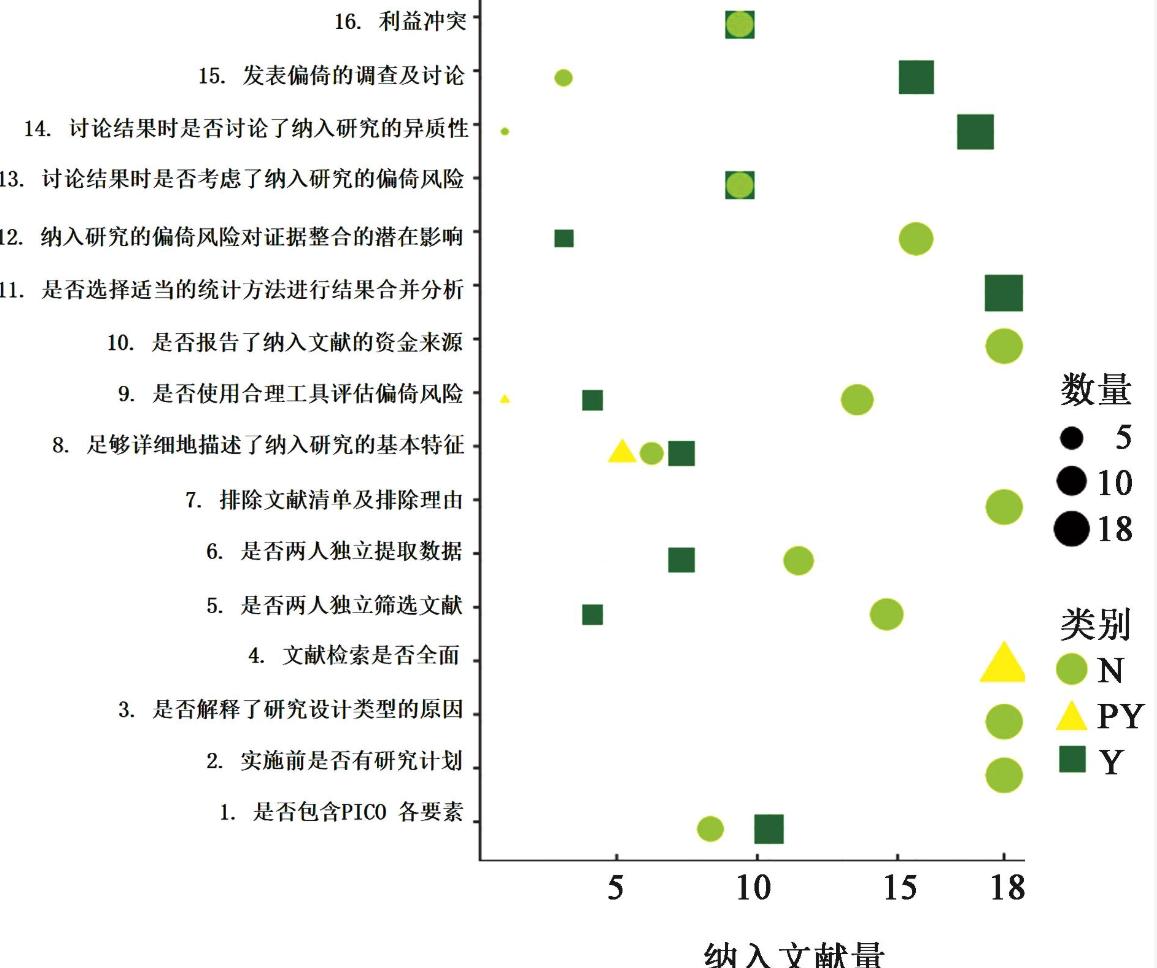
Abstract:ObjectiveTo re-evaluate the systematic reviews/Meta-analyses (SRs/MAs) of tonic traditional Chinese medicine (TCM) injections against cerebral ischemic stroke (CIS) and provide evidence support for clinical practice and decision-making.MethodTCM injections of different varieties were obtained after searching the three major drug catalogues. Seven Chinese and English databases were searched from database inception to March 13,2022,for the relevant SRs/MAs. The methodological quality,risk of bias,reporting quality,and quality of evidence were assessed by Assessment of Multiple Systematic Reviews-2 (AMSTAR-2),the Risk of Bias in Systematic Review (ROBIS),the Preferred Reporting Items for Systematic Reviews and Meta-analyses 2020 (PRISMA 2020),and the Grading of Recommendations Assessment,Development,and Evaluation (GRADE). In addition,the literature overlap matrix was established to calculate the corrected covered area (CCA) and evaluate the rate of overlaps of the original literature.ResultFive types of TCM injections and 18 SRs/MAs were included. AMSTAR 2 evaluation showed that the methodological quality of 18 SRs/MAs was extremely low,and 14 SRs/MAs had a high risk of bias assessed by ROBIS. The quality evaluation results reported by the PRISMA 2020 showed that the scores of the studies included ranged from 19.5 to 28.5,with 10 being of medium quality and eight of low quality. The evaluation with the GRADE system demonstrated that one outcome was moderate-quality evidence,15 outcomes were low-quality evidence,and 41 outcomes were very low-quality evidence. The CCA of the included SRs/MAs was 0.263,indicating a low rate of overlaps of the original literature.ConclusionTonic TCM injections are effective and safe in the treatment of CIS,but this conclusion should be treated with caution because of the low quality of methodology,reports,and evidence in published SRs/MAs. It is recommended to improve the study design,obtain clinical evidence of higher quality,and conduct systematic evaluations in strict accordance with procedures to standardize the reporting of research results.Keywords:tonic traditional Chinese medicine injection;cerebral ischemic stroke;overview of systematic reviews443|661|3 <HTML><H-PDF><L-PDF><XML>Updated:2023-02-15
Clinical Evidence of Chinese Patent Medicines in Treatment of Respiratory Diseases in Children: A Scoping Review Enhanced Publication
Abstract:ObjectiveThis study performed a scoping review to comprehensively analyze and report the information on the instructions of Chinese patent medicines and clinical research evidence for the treatment of respiratory diseases in children.MethodChinese patent medicines against respiratory diseases in children were obtained by searching the three major drug catalogues. The Chinese and English databases were searched for relevant literature,followed by data statistics and visualized analysis.ResultAfter screening and analysis,52 Chinese patent medicines were included,involving nine dosage forms. The main drugs were Scutellariae Radix,Armeniacae Semen Amarum,Forsythiae Fructus,etc. The main functions included clearing heat and releasing exterior syndrome,and relieving cough and dissipating phlegm. The indications mainly included common cold with wind-heat syndrome and cough in children. Adverse drug reactions and contraindications were only specified in 19.23% (10/52) of Chinese patent medicines,and the rest only displayed "unclear". A total of 279 articles were included,including 277 articles from Chinese Core Periodicals and two articles from SCIE. In terms of research type,those articles included 253 randomized controlled trials (RCTs,with six dosage form/dose comparisons involved),11 retrospective analyses based on Hospital Information System (HIS) data,one case series,13 systematic reviews/Meta-analyses (with two network Meta-analyses involved),and one economic evaluation article. Among them,72.76% (203/279) of the articles were published in the Core Journals of Chinese Science and Technology. Only 33 Chinese patent medicines were involved,and Xiaoer Feire Kechuan Oral Liquid was the top 1 under investigation,accounting for 15.71% (44/280). The indicated diseases were mainly infantile pneumonia,bronchitis,respiratory tract infection,cough,asthma,and other western medicine diseases. Xiaoer Chiqiao Qingre Granules and Xiaoer Dingchuan Oral Liquid were used off-label. The sample size was concentrated in 51-150 cases,accounting for 67.17% (178/265). The interventions in the experimental group were mainly Chinese patent medicine + western medicine + basic treatment or Chinese patent medicine + western medicine. The main outcomes were the effective rate and the improvement of clinical symptoms. The adverse reactions were mainly gastrointestinal reactions,drug-induced skin symptoms,etc.,and two studies have shown that drug doses were associated with adverse reactions.ConclusionIn research years,the research on Chinese patent medicines in the treatment of respiratory diseases in children has advanced rapidly. However,there are still some problems that need to be resolved in the future,such as incomplete information on drug content in the instruction,concentrated drugs to be studied,limited indications,failure to highlight the characteristics of traditional Chinese medicine (TCM) syndromes,unstandardized research design,and an incomplete reflection of Chinese patent medicine.Keywords:Chinese patent medicine;respiratory diseases;children;clinical research evidence;scoping review664|808|2<HTML><H-PDF><L-PDF><XML>Updated:2023-02-15Clinical Evidence of Oral Chinese Patent Medicines in Treatment of Cardiac Arrhythmia: A Scoping Review Enhanced Publication
Abstract:ObjectiveTo review the drug information and research progress on oral Chinese patent medicines in the treatment of cardiac arrhythmia to identify existing problems and provide references for follow-up research.MethodChinese patent medicines against cardiac arrhythmia were retrieved from the three major drug catalogues,Yaozh.com,and relevant guidelines with arrhythmia as the retrieval term. The instructions for included Chinese patent medicines were retrieved through Yaozh.com and specific information was extracted. The research articles on Chinese patent medicines included were retrieved from the five databases,and the information meeting the inclusion and exclusion criteria was extracted and displayed in the form of text description and graphs after statistical analysis.ResultSixty-five oral Chinese patent medicines were included in this study,with the main functions of activating the blood and resolving stasis. The average daily cost of medicines was 8.17 yuan,and there were 42 medicines with an average daily cost of less than 10 yuan,showing a moderate medicine cost. A total of 351 research articles on Chinese patent medicines were screened out,including 259 randomized controlled trials (RCTs),16 non-RCTs,eight non-controlled trials,62 systematic reviews,two guidelines,and two expert consensuses. Eighteen types of Chinese patent medicines were involved,whose clinical trials had been conducted in 28 provinces,cities,autonomous regions,and municipalities in China. Wenxin granules and Shensong Yangxin capsules were the top medicines under investigation,accounting for 75.21% of all research articles. Among the included studies,the most common comparison design was Chinese patent medicine combined with western medicine vs western medicine (64.25%). The outcome evaluation was mainly based on clinical efficacy,symptom efficacy,arrhythmia efficacy,adverse reactions,and heart rate changes.ConclusionThe number of clinical studies of oral Chinese patent medicines against cardiac arrhythmia varies greatly,but traditional Chinese medicine (TCM) syndrome differentiation thinking is less considered in practical application. Due to unstandardized clinical research and low-quality literature,further advancement is required in the future.Keywords:cardiac arrhythmia;oral Chinese patent medicine;clinical research evidence;scoping review719|1772|4<HTML><H-PDF><L-PDF><XML>Updated:2023-02-15Introduction to Health Research Priority Setting Methods and Application Recommendations of Methods in Field of Traditional Chinese Medicine Enhanced Publication
Abstract:Health research priority setting, based on the existing disease burden or healthcare needs, screens out specific areas or topics with relatively high research priority by scientific and systematic methods, and optimizes the allocation of health resources by influencing healthcare decision-making, so as to alleviate the imbalance between regional or global health and development. Many developed countries have carried out related research and practical work on different scales, and the World Health Organization (WHO) attaches great importance to the transformation and application of relevant achievements in developing countries. As the largest developing country in the world, China's research in this field started relatively late, and only a small number of scholars have carried out part of the localization methodology research and practice according to the specific national conditions. However, health research priority setting has not yet attracted the attention of large-scale research institutions or government organizations in China. Although the priority setting is rarely mentioned in the research on traditional Chinese medicine (TCM), the research and decision-making on the diseases responding specifically to TCM can also be regarded as the practical work of exploring the priority of TCM. Policymakers have a sense of priority support in the "priority of TCM research", but the decisions from the top design are mainly based on the consensus reached by high-level think tanks. There is a lack of extensive research, and moreover, the data of multiple stakeholders are not included. Therefore, it is urgent to introduce appropriate priority setting methods to solve the problem of transparency and scientificity in the decision-making process. Given the perspective of the specific implementation, the present study introduced three international priority setting methods, i.e., the James Lind Alliance and Priority Setting Partnerships(JLAPSP,)the Child Health and Nutrition Research Initiative(CHNRI), and the Council on Health Research and Development (COHRED), and presented relevant recommendations on how to apply them in the research of TCM, which is expected to provide references for the local research.Keywords:priority setting;health research;healthcare decision-making;methodology;traditional Chinese medicine research327|319|0<HTML><H-PDF><L-PDF><XML>Updated:2023-02-15Clinical Researches on Chinese Patent Drug for Diabetes: A Scoping Review Enhanced Publication
Abstract:ObjectiveTo review the drug information and clinical researches on Chinese patent drug in Pharmacopoeia of the People's Republic of China,National Essential Drugs List and Medicine List for National Basic Medical Insurance,Employment Injury Insurance and Maternity Insurance.MethodSearch Chinese patent medicine,which can reduce blood sugar in the three major catalogues above. CNKI,VIP,Wanfang,Embase and PubMed were searched from their inception dates to August 14th,2021 for the clinical researches on Chinese patent drug. A database was established based on the collected Chinese patent drug for the treatment of diabetes. And then,descriptive analysis was performed to analyze the general condition of clinical researches.ResultFrom the three catalogues above,28 kinds of Chinese patent drugs were retrieved, and Supplementing Qi and Nourishing Yin was the basic effect of 22 kinds of Chinese patent drugs. A total of 1 069 clinical researches published and peaked in 2017 before August 14th,2021 were included. Clinical studies have been carried out and published in all 30 provinces and autonomous regions,and the province with the largest number of published literature was Henan.What's more,16.65% of the projects were supported by government funding. The number of research to Shenqi Jiangtang tablets/granules/capsules was the largest,among the 28 kinds of Chinese patent drugs.Besides,the most frequent type of interventions in the 958 two-arm trials was the load test,accounting for 78.91%.Most types of diabetes,including type 1 diabetes,type 2 diabetes and its complications,gestational diabetes,other types of diabetes and pre-diabetes,were covered in in this study. And the results showed that different drugs with different suitable crowd.ConclusionA summary of the current status of clinical research on Chinese patent drug by means of scoping review can provide direction for the next research.Keywords:scoping review;Chinese patent drug;diabetes;clinical research374|960|2<HTML><H-PDF><L-PDF><XML>Updated:2023-02-15


